

General
Is Jade Plant a Succulent? Everything You Need to Know
Is jade plant a succulent? Yes, and understanding why changes how you care for it. Read our complete guide to jade plant biology, watering, light, and
Por Daniel Sanchez, CEO · Publicado el 2026-10-14
Yes, jade plant is a succulent. That one-sentence answer matters more than it sounds, because once you understand why jade qualifies as a succulent, the care rules start to make obvious sense rather than feeling like arbitrary instructions you have to memorise.
This guide covers the biology behind the classification, what it means for day-to-day care, how jade performs in South Florida's climate, and when a potted jade plant makes a better gift than cut flowers.
Is Jade Plant a Succulent: The Botanical Answer
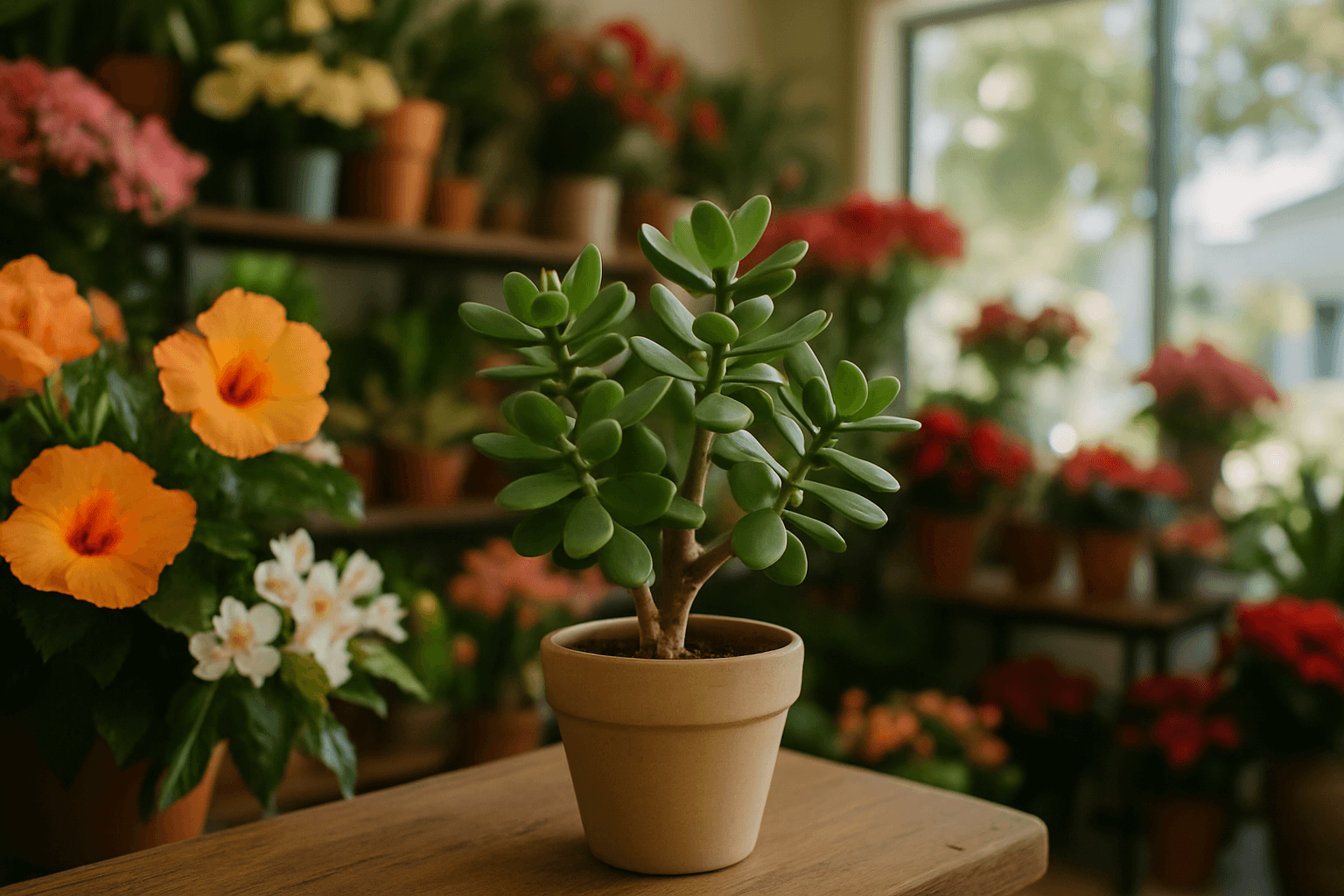
Jade plant (Crassula ovata) belongs to the family Crassulaceae, a lineage packed with succulents. The defining trait of any succulent is water storage in its tissues. Jade stores water primarily in its leaves, which is why those leaves are thick, firm, and slightly rubbery to the touch. The stems hold water too, and as a plant matures the lower trunk becomes woody and bark-like.
The classification isn't just academic. Succulents evolved in environments where rain arrives in bursts followed by long dry spells. Their anatomy is built around that rhythm: absorb quickly, store efficiently, draw on reserves slowly. Every care mistake that kills a jade plant traces back to ignoring this fact.
How Jade Stores Water (and Why That Changes Watering Rules)
Cut a jade leaf open and you'll find dense, gel-like tissue rather than the fibrous interior of a non-succulent leaf. That tissue is the plant's reservoir. When soil moisture drops, the plant draws on stored water in the leaves. When it rains or you water generously, the leaves plump back up.
This is why overwatering kills jade plants far more reliably than underwatering. Soggy soil prevents the roots from breathing, and Crassula roots rot quickly under those conditions. The leaves go yellow, then mushy, and by the time you notice, the root system may already be compromised.
A safer approach: water thoroughly, then wait until the top inch or two of soil is dry before watering again. In a warm, humid climate like South Florida's, that interval is often longer than you'd expect, sometimes stretching to ten days or more between waterings depending on pot size and season.
Jade Plant in South Florida: Climate Considerations
South Florida's climate is genuinely good for jade plants, with one caveat. The year-round warmth suits them. Jade is frost-tender, and it thrives in temperatures that most of our region maintains without effort.
The caveat is humidity and rainfall. Jade handles dry indoor air well, which is why it's popular as a houseplant in air-conditioned homes across Aventura, North Miami, and Surfside. Outdoors, South Florida's summer rainy season can be too much. From roughly June through September, daily afternoon downpours can keep soil perpetually moist, which is exactly the condition jade cannot tolerate long-term. If you grow jade outside, a covered patio or roof overhang that blocks direct rain is worth considering.
In October, where we are right now in the seasonal calendar, conditions improve. The rainy season is winding down, humidity drops slightly, and jade planted in well-draining mix will start looking its best through the dry winter months ahead.
Light Requirements for a Healthy Jade Plant
Jade wants bright light. Outdoors, it tolerates direct morning sun and appreciates a few hours of it. Harsh midday summer sun in South Florida can scorch the leaves, so filtered afternoon light is a reasonable compromise.
Indoors, place jade near a south- or east-facing window. If the stems start to stretch and reach toward the light source, etiolation is happening, meaning the plant isn't getting enough. Etiolated stems are weaker and the growth looks sparse rather than the dense, branching shape jade is admired for.
One signal that jade is getting the light it needs: the leaf edges may develop a faint reddish tinge. That's normal and actually indicates good light levels rather than stress.
Soil, Pots, and Repotting
Because jade is a succulent, drainage is more important than nutrient richness. A commercial cactus-and-succulent mix works well, or you can cut standard potting soil with coarse perlite at roughly a 1:1 ratio. The goal is a mix that lets excess water drain freely and dries out between waterings.
Terracotta pots are a reliable choice because they breathe and wick moisture away from the root zone faster than glazed ceramic or plastic. A pot with at least one drainage hole is non-negotiable.
Jade plants grow slowly and don't need frequent repotting. When roots start to circle visibly at the drainage hole or growth slows significantly, moving up one pot size is enough. Jumping to a much larger pot all at once leaves excess soil around the roots that stays wet too long.
Propagation: One of Jade's Best Traits
Jade propagates easily from stem cuttings or even individual leaves, which is one reason it gets passed around between neighbours and households. Let a cutting sit in open air for a day or two until the cut end calluses over. Then set it in dry succulent mix and hold off on watering for about a week. Once roots develop, ease into a normal watering routine.
Leaf propagation is slower but works. Gently twist a healthy leaf off as close to the stem as possible so it detaches cleanly, let it callus, and lay it on top of dry mix. Tiny plantlets will emerge from the base of the leaf over several weeks.
Jade as a Gift Plant in South Florida
Potted jade plants travel well and last much longer than a cut arrangement. They're a natural fit for housewarmings, new-office setups, or any occasion where something lasting is the point.
If you're thinking about gifts that include living plants alongside cut flowers, Miami Gardens Florist carries arrangements and plant options suited to Aventura and surrounding neighbourhoods. The Adoration product is worth a look for occasions where a single, well-composed piece works better than a mixed-format gift. Browse the housewarming gifts category for options that pair well with a potted plant from a local garden centre. For a wider view of what's available, the full flower shop covers cut arrangements across all occasions.

Sculpted Succulent
$129.99

Adoration
$399.95
Frequently Asked Questions
Is jade plant a cactus or a succulent?
Jade plant is a succulent, not a cactus. Both cacti and succulents store water in their tissues, but cacti belong specifically to the family Cactaceae. Jade (Crassula ovata) belongs to Crassulaceae. The two families are unrelated, even though the care overlaps in some ways.
How often should I water a jade plant in Florida?
In South Florida's climate, especially during the drier months from October through April, watering every ten to fourteen days is a reasonable starting point for a jade in a well-draining pot. In summer, outdoor rainfall may mean you water rarely or not at all. Always check the soil rather than watering on a fixed schedule.
Why are my jade plant's leaves falling off?
The two most common causes are overwatering and sudden temperature change. If the fallen leaves are yellow and soft, overwatering is the likely culprit. If they're firm but dropping, check whether the plant was recently moved, exposed to a cold draft, or placed near an air-conditioning vent. Jade doesn't like abrupt changes in its environment.
Can jade plants live outdoors year-round in South Florida?
They can, with the right setup. Jade is frost-tender, so the rare cold nights South Florida sees in January and February warrant some protection, such as moving the pot indoors briefly or covering the plant. The bigger challenge is managing summer rainfall. A covered but bright outdoor spot handles both issues reasonably well.
Where to Go From Here
Jade plant is a succulent in every meaningful sense, and understanding that fact is the foundation of caring for one successfully. It wants good light, fast-draining soil, and a watering routine that respects its built-in water storage. In South Florida's climate it thrives indoors and does well outdoors in the dry season.
If you want to pair a jade plant with something from a florist for a gift or occasion, the full range of flowers and arrangements from Miami Gardens Florist covers Aventura, North Miami Beach, Sunny Isles Beach, Bal Harbour, and surrounding neighbourhoods. For more plant and floral guides, visit the South Florals flower guides hub.