

General
What to Do with Dead Flowers: 8 Practical Ideas
Dead flowers don't have to go straight to the bin. Discover eight practical ways to press, dry, compost, or repurpose blooms at home in South Florida.
By Daniel Sanchez, CEO · Published 2026-10-14
Flowers don't last forever, but that doesn't mean they're done the moment the petals start to drop. Knowing what to do with dead flowers can save you some guilt, give you a new craft project, or just make your compost pile very happy. This guide covers eight real options, from pressing and drying to repurposing and letting go, so you can decide what actually makes sense for the blooms you have on hand.
Why It's Worth Pausing Before You Toss Them
South Florida's heat means cut flowers move fast. A bouquet of garden roses or stargazer lilies that looked sharp on Monday can look tired by Thursday. Before you bag them up, take thirty seconds to sort the stems. Some will be worth keeping in a different form; others genuinely belong in the bin or the compost. The difference is usually obvious once you look closely.
Petals that are dry and papery can be pressed or used in potpourri. Stems that are slimy or mouldy should go straight to the compost. Flowers that are wilted but not yet rotting sometimes just need a fresh cut and a few hours in deep cold water, though in South Florida's humidity that window is short.
What to Do with Dead Flowers: 8 Ideas That Actually Work
1. Press Them
Pressing is the most straightforward way to hold onto a bloom. Lay individual petals or small flat flowers between two sheets of absorbent paper, slide them inside a heavy book, and leave them for two to three weeks. Roses, bougainvillea, and flat-faced orchid petals all press well. The result is dry, brittle, and long-lasting, useful for framing, card-making, or resin projects.
2. Air-Dry Whole Stems
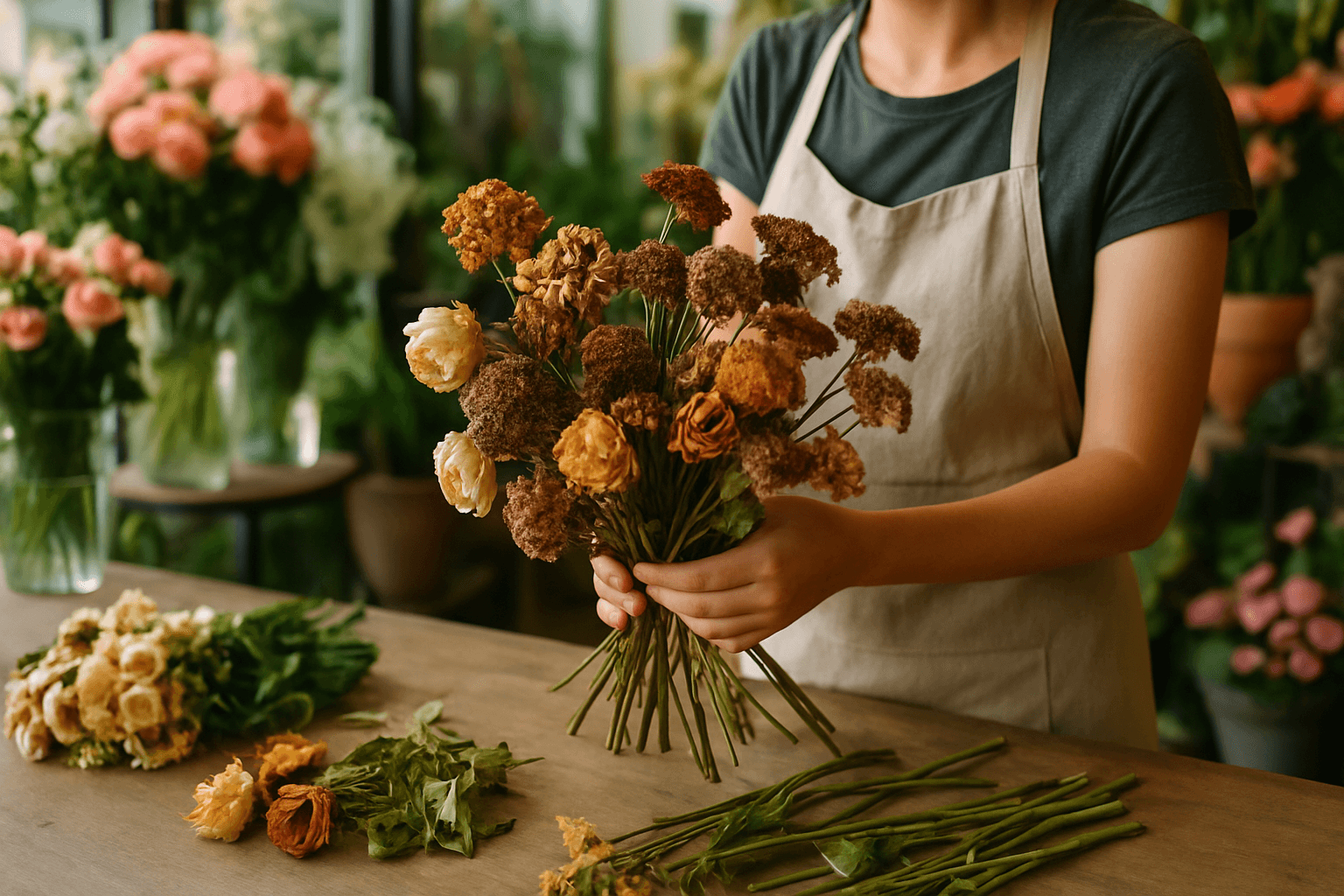
Bundle five or six stems together, tie them at the base, and hang them upside down in a dry spot with decent airflow. Lavender, statice, and proteas dry beautifully this way, and proteas are common in South Florida arrangements because they handle the tropical climate well. Roses dry a little darker and more rustic. Give them two to three weeks.
3. Make Potpourri
Once petals are fully dry, toss them in a bowl with a few drops of essential oil and a fixative like dried orange peel or cloves. Rose petals, gardenia, and jasmine all hold scent reasonably well. This won't replicate the original fragrance exactly, but a small dish on a bathroom shelf is genuinely pleasant and uses material that would otherwise be waste.
4. Infuse Oil or Vinegar
Dried rose petals steeped in a neutral oil for a few weeks produce a lightly scented oil that works in DIY skincare. The process is simple: fill a clean jar with dried petals, cover with a carrier oil like jojoba or sweet almond, seal it, and leave it in a cool dark spot. Strain before use. This is a longer project, but if you regularly receive roses, it's a practical use for petals you'd otherwise discard.
5. Compost Them
If the flowers are past any other use, the compost bin is the right call. Fresh or wilted organic matter breaks down quickly in South Florida's warm conditions. Pull off any wire, foam, or plastic picks first. Diseased plant material is the one exception: if the stems show black rot or obvious fungal spots, bag those separately to avoid spreading pathogens.
6. Freeze Petals in Ice Cubes
This sounds decorative, but it has a practical angle too. Rose petals or small orchid petals frozen into ice cubes make a simple addition to a drinks table for a party. Freeze the petals in a little water first, then top up with more water and freeze again. The two-stage method keeps the petals centred rather than floating to the top. Use within a month.
7. Create Petal Confetti
Dry your petals fully, then store them in a sealed jar. Petal confetti works well for outdoor events, particularly in autumn when South Florida finally cools down a little. October is actually a reasonable time to start collecting dried petals for events planned through the winter season, which runs through early spring here. Bougainvillea petals, rose petals, and dried phalaenopsis orchid petals all hold their colour well.
8. Frame or Display Them
A simple frame with a pressed flower and a small handwritten note is a practical keepsake from a meaningful bouquet. You don't need special equipment beyond a frame with a flat backing, some archival tissue, and a small amount of white glue. Shadow boxes work well for bulkier arrangements or corsages you want to preserve three-dimensionally.
Which Flowers Hold Up Best for Drying and Pressing
Not every stem is worth the effort to preserve. As a general rule:
- Good for drying: roses, statice, proteas, lavender, strawflowers, globe amaranth
- Good for pressing: pansies, larkspur, flat orchid petals, bougainvillea, ferns
- Skip the effort: tropical stems with high water content, like anthuriums or birds-of-paradise, turn brown and brittle without holding any useful form. Lilies also press poorly because of their thick petals.
Orchids sit in the middle. Phalaenopsis petals press reasonably well if they're still pliable. Whole orchid spikes don't dry cleanly, but individual florets do.
A Note on Timing in South Florida
The humidity here works against most preservation methods. If you're air-drying stems, a room with air conditioning running makes a real difference. A damp garage won't work. Pressing flowers also benefits from dry conditions, so if you're doing it during summer, change the absorbent paper after the first few days to prevent mould forming.
October is one of the better months to try these projects locally. The humidity has usually eased slightly compared to August and September, and you're heading into the season where dried flowers and pressed botanicals fit naturally into holiday and event decor.
For information on Florida native and adapted plants that grow well in the region, UF/IFAS has a useful Florida flowers resource covering local growing conditions.
When It's Time for Fresh Flowers Instead
Sometimes the honest answer is that the old bouquet has run its course and the right move is a new one. If you're in Aventura, Sunny Isles Beach, Bal Harbour, Surfside, or the surrounding neighbourhoods, Miami Gardens Florist carries a full range of cut stems and arrangements.
The full flower collection includes seasonal and tropical options. For something specific, the Adoration arrangement is a reliable option when you want something put together rather than a loose bouquet. Same-day orders placed before 14:30 local time can be arranged on the day.


Browse all arrangements and occasions to find what fits.
Frequently Asked Questions
Can dead flowers make you sick?
Mouldy or rotting plant material can release spores that irritate airways, particularly for people with allergies or asthma. Keep mouldy flowers out of your composting area if you're sensitive, and wash your hands after handling decomposing stems.
How long does it take to press flowers?
Most flowers need two to three weeks in a heavy book with absorbent paper. Thicker petals may take longer. Changing the paper after the first few days speeds up the process and reduces the risk of mould in humid conditions.
Do dried flowers last forever?
Not quite, but they can last for years if kept out of direct sunlight and away from humidity. Direct sun fades colour quickly. A sealed frame or a spot away from windows keeps dried flowers looking good for a long time.
Is it safe to compost flowers from a florist?
Generally yes. Remove any non-organic materials first: wire stems, plastic water picks, foam frogs, and synthetic ribbon. The flowers themselves compost cleanly. If the arrangement included dyed or treated stems, those are fine for home compost in small quantities.
The next time a bouquet starts to turn, it's worth spending a few minutes deciding what to do before tossing everything. Some stems are worth pressing or drying; others belong in the compost; and a few might end up frozen in a party ice cube. The answer depends on what you have and how much time you want to spend. There's no obligation to preserve every petal, but it's good to know the options exist.